
 lights
Lights
Every HomeKit compatible light — bulbs, strips, panels and lamps — and which need a bridge rather than joining Apple Home directly.
96 products23 brands
Compare lights
The 64 lights whose specifications we have recorded. An em dash means we have not confirmed that detail yet, which is not the same as no. 10 of them have a current Amazon UK listing we could verify; the rest are catalogued for reference and may be discontinued or sold only through dealers.
Some links below are affiliate links: we may earn a commission if you buy through them, at no extra cost to you.
Showing 96 of 96 lights
Some links below are affiliate links: we may earn a commission if you buy through them, at no extra cost to you.
lights bridges
lights
lights
lights
lights
lights
lights
lights
lights
lights
lights
lights
lights
lights
lights
lights
lights
lights
lights
lights
lights
lights
lights
lights
lights
lights
lights
lights
lights
lights
lights
lights
lights
lights
lights
lights
lights
lights
lights
lights
lights
lights
lights
lights
lights
lights
lights
lights
lights
lights
lights
lights
lights
lights
lights
lights
lights
lights
lights
lights
bridges
lights
lights
lights
lights
lights
lights
lights
lights
lights
lights
lights
lights
lights
lights
lights
lights
lights
lights
lights
lights
lights
lights
lights
lights
lights
lights
lights
lights
lights
lights
lights
lights
lights
lights
lights
lights
lights
lights
lights
lights
lights
lights
lights
lights
lights
lights
lights
lights
lights
lights
lights
lights
lights
lights
lights
lights
lights
lights
lights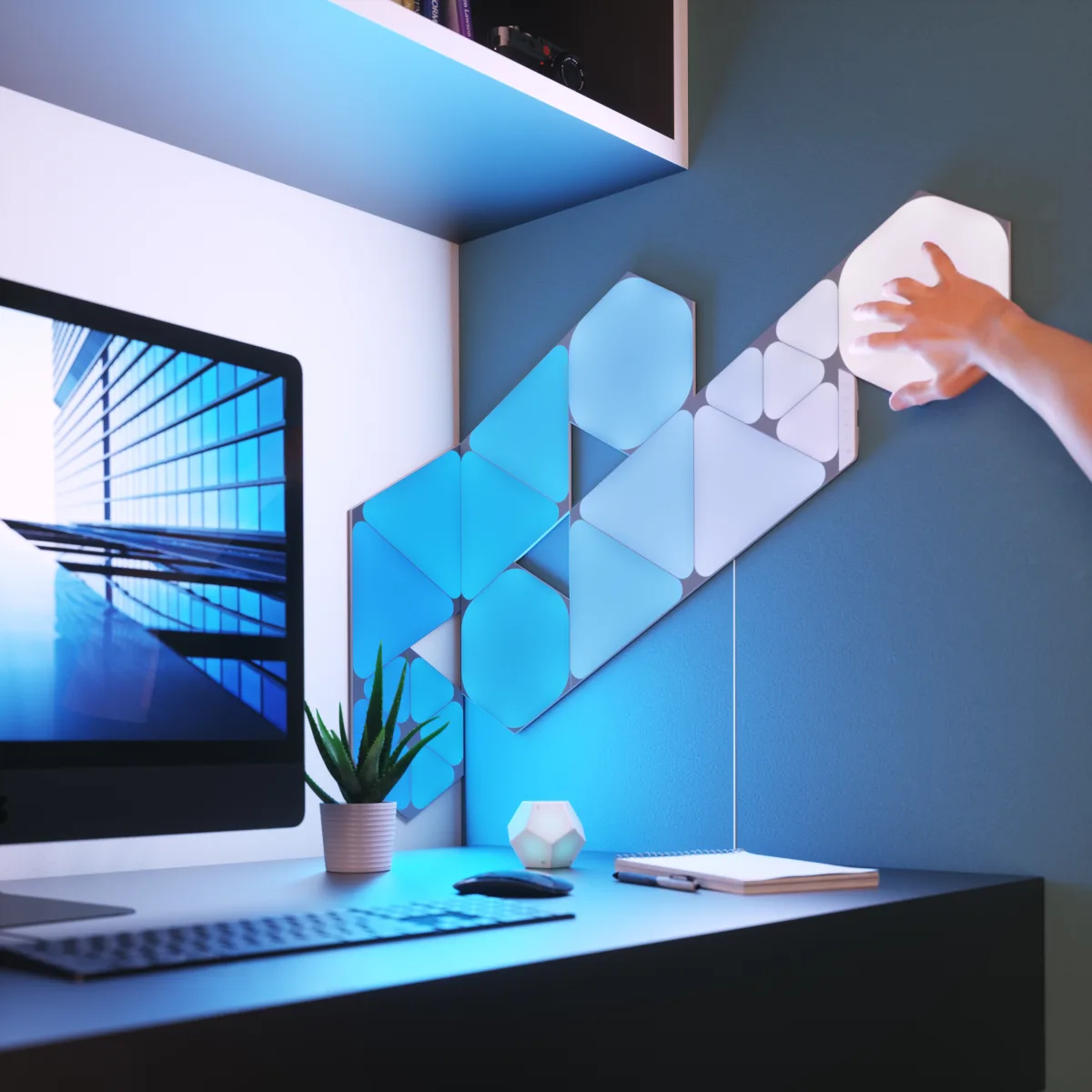 lights
lights
lights
lights
lights
lights
lights
lights
lights
lights
lights
lights
lights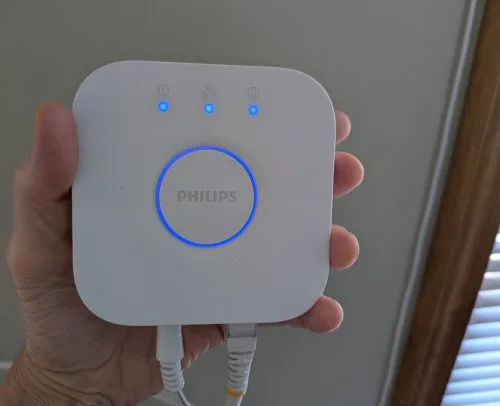
Philips Hue
Philips Hue Bridge – supports Philips Hue bulbs, light fittings, switches and sensors
Zigbee
at Amazon
Buy
lights
lights
lights
lights
lights
lights
lights
lights
lights
lights
lights
lights
lights
lights
lights
lights
lights
lights
lights
lights
lights
lights
lights
lights
lights
lightsNo lights match these filters.
Some links below are affiliate links: we may earn a commission if you buy through them, at no extra cost to you.
Every light listed here works with Apple Home. What separates them is how they get there, and that decides far more about living with them than colour range or brightness ever will.
There are two routes. A bridge-based system puts a small hub on your router and talks to the bulbs itself — Philips Hue uses Zigbee for this. A direct light joins your Wi-Fi or your Thread network on its own, with nothing else to buy. A bridge costs more before you own a single bulb and holds up better once you have thirty of them; direct bulbs are cheaper for one room and busier on your network at scale.
Either route, one thing is not optional: automations, schedules and control from outside the house need a home hub — a HomePod or an Apple TV that stays at home. Without one you get an app remote control that only works on your own Wi-Fi.
HomeKit compatible light bulbs and fittings we would buy
The first bulb: Nanoleaf Essentials
The Nanoleaf Essentials Smart LED Bulb is a Matter accessory that joins Apple Home over Thread, with Bluetooth for setup, and needs no bridge and no manufacturer hub. If you own a Thread border router — a HomePod mini, HomePod 2, or a recent Apple TV — this is the least complicated way to put a colour bulb into a room and have it respond instantly.
The system: Philips Hue Bridge
Buy the Hue Bridge if you are lighting a whole house rather than a corner of one. It is the piece that brings Hue bulbs, fittings, switches and sensors into Apple Home, and it is the reason Hue stays responsive at a scale where Wi-Fi bulbs start to feel slow. It is a genuine cost, though: the Bridge itself lights nothing.
Strip lighting: LIFX Lightstrip
The LIFX Lightstrip joins Wi-Fi directly, so there is no bridge to power and no Ethernet port to find. That is the practical difference between LIFX and Hue, and for one strip behind a worktop or a headboard it is the cheaper answer.
If you want the effect for less, the Tapo Smart Light Strip does the same job on Wi-Fi. Buy the L930-5 specifically — it is the only Tapo strip that joins Apple Home, and the cheaper L900 models give you Siri Shortcuts but no Home accessory. Check price on Amazon UK
Chandeliers and wall lights: LIFX Candle
Most smart bulbs are the wrong shape for a chandelier, a wall light or a small pendant. The LIFX Candle is the candle-shaped bulb in the LIFX range and fills that gap. Check the cap size before you order — candle fittings come in E12, E14 and E27, and a multi-arm chandelier gets expensive fast at smart-bulb prices.
A feature wall: Nanoleaf Shapes Hexagons
Nanoleaf Shapes Hexagons are modular panels that clip together in whatever arrangement the wall allows, respond to touch, and appear in Apple Home as a light you can put in scenes and automations. No bridge required. Sold as a starter kit and expandable afterwards, which is the right way to buy them: start small and see how the wall looks.
Behind the television: Nanoleaf 4D
The Nanoleaf 4D reads the picture with a small camera clipped to the set rather than sitting on the HDMI path. That means it works with any source — console, set-top box, streaming stick or the TV’s own apps — and sidesteps the HDMI and copy-protection problems that catch out pass-through systems. Screen mirroring runs in Nanoleaf’s own app; Apple Home sees a light.
Outdoors and portable: Eve Flare
The Eve Flare runs on a rechargeable battery and is rated IP65, so it is a table lamp indoors that carries out to a terrace and survives the rain. It needs no bridge. Battery life is the thing to plan around: bright colour drains it far faster than a dim warm white.
What actually differs between HomeKit lights
Bridge or direct. Covered above, and it is the first decision. Everything else is easier to change your mind about later.
Matter and Thread. A Thread bulb is not on your Wi-Fi at all; it joins a low-power mesh that a HomePod or Apple TV routes for it, and every mains-powered Thread device extends that mesh. In practice Thread lights react faster and survive a busy Wi-Fi network better. What Matter means for HomeKit is worth ten minutes before you commit to a platform.
Colour, tunable white, or plain white. Full colour costs the most and, for most people, gets used for a fortnight and then settled on a warm white. Tunable white — cool in the morning, warm at night — is the feature that actually changes a room day to day. Buy colour where you will see it: strips, panels, lamps. Buy tunable white in ceiling fittings.
The cap fitting. UK homes mix B22 bayonet and E27 screw in ceiling fittings, E14 in lamps and candle fittings, and GU10 in spots. This is the most common reason a smart bulb goes back. Look at the bulb you are replacing before you order, not after.
The dumb switch on the wall. A smart bulb only works while it has power, so anyone flicking the wall switch off takes it off the network entirely. Either train the house to leave switches on, or use a smart switch and ordinary bulbs where that is unrealistic — a hallway, a rented flat, a room with guests.
Where the light physically is. A bulb behind a metal shade or inside a sealed fitting is a worse radio position than the spec sheet imagines. It matters more for Wi-Fi bulbs than for Zigbee or Thread, both of which mesh.
Also worth reading
- Best HomeKit-compatible lightbulbs — the longer bulb-by-bulb rundown.
- What is Matter, and why does it matter for HomeKit?
- LIFX Colour 800lm vs 1100lm — if you are choosing between the two LIFX brightnesses.
The full list of every HomeKit compatible light in the directory is below, with filters for connectivity and brand.